

The Science Behind Co-Working
Plus Pinterest's branding itself as 'safe', a playbook on landing a job & finding the fun online

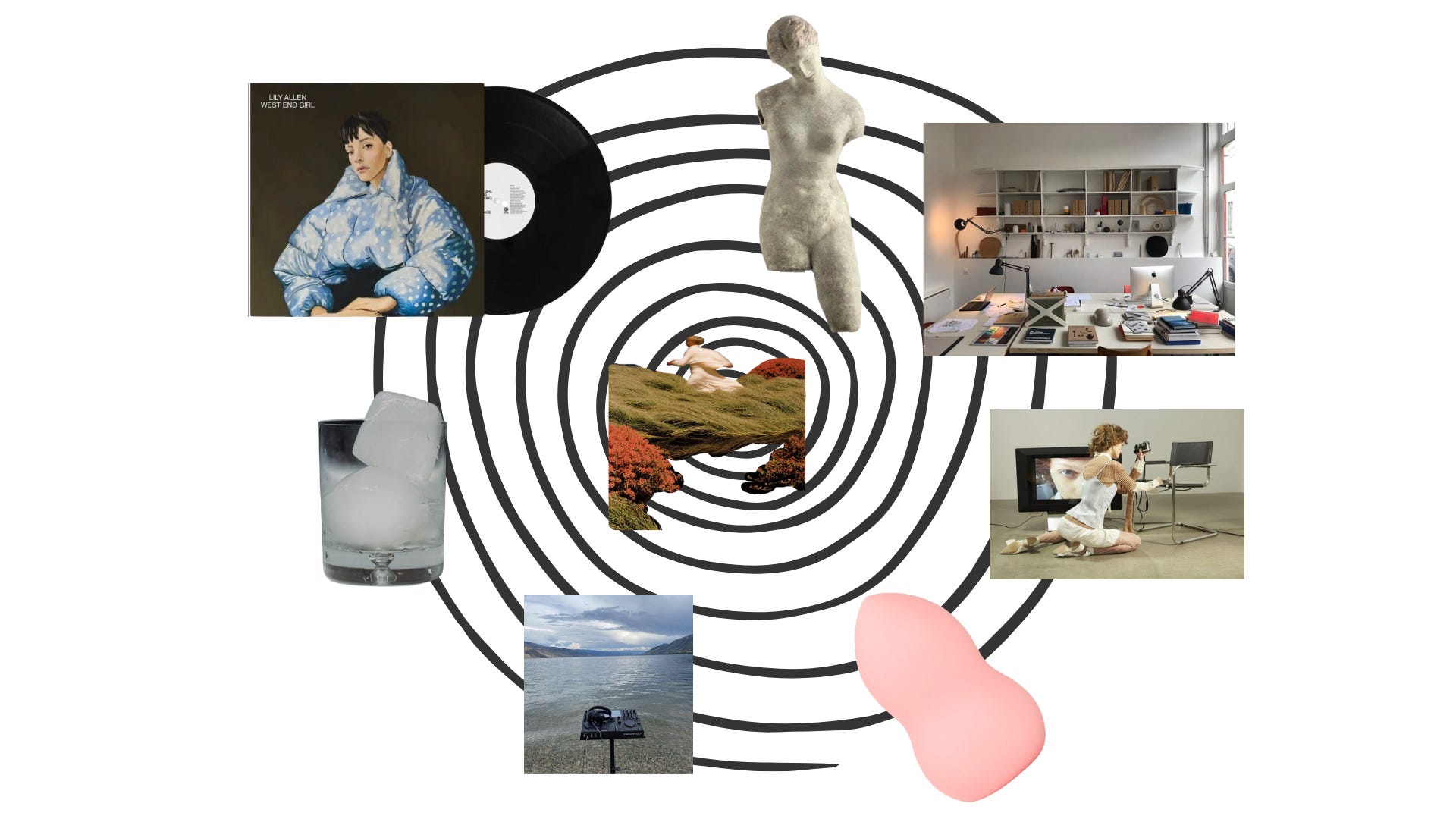
I’ve always worked better in a room full of people. It’s one of the things that I struggled with the most when going full time on Ponnd and I know I’m not the only one. Co-working spaces are on the rise with the market expected to double in the next 10yrs. But what draws us to co-working, and how does it actually affect our brains? (Yes, I’m back on my research deep dive bullshit.)
Here are some of the most interesting findings:
Presence of others is proven to improve performance
So this is anything, but new. Back in 1898, psychologist Norman Triplett noticed that cyclists rode faster when they were racing against other people versus riding solo. He tested this with kids turning fishing reels and found that most of them worked faster when other people were doing the same task next to them
This psychological principle, later termed social facilitation, describes how the mere presence of others can improve performance on tasks. The effect operates two ways:
Awareness of others around triggers natural accountability without direct oversight
When your in an environment with other focused and productive people it triggers behavioral modeling, where you unconsciously adopt to those around.
Note: Behavioural modelling can also go the other way and high performance individuals can be brought down low performing people around them.
The Environmental Psychology of Productive Spaces
Turns out, your environment actually matters for how well your brain works and co-working spaces are designed with this in mind. The research points to three key things:
Optimal Ambient Noise: Complete silence can actually impair creative thinking for many people. Studies show that moderate ambient noise around 70 decibels — typical of a well-designed co-working space — enhances creative cognition.
Natural Light and Air Quality: Environmental factors directly impact brain performance. Research published in the Journal of Clinical Medicine found that workers in environments with ample natural light experienced 15% better cognitive performance compared to those in artificially lit spaces. Additionally, the Harvard T.H. Chan School of Public Health demonstrated that improved indoor air quality and temperature control can increase cognitive performance by up to 61%.
Neural Synchrony: Emerging research in social neuroscience reveals that individuals working together in shared environments experience neural synchrony — alignment of brain activity between people. This phenomenon facilitates the gathering, integration, and broadcasting of information across the brain, creating optimal conditions for collaborative problem-solving.
The Body Doubling Phenomenon
Then there is also this emerging strategy of body doubling which I’ve actually heard alot about in the ADHD community. Basically the principal of body doubling is working in the presence of another person, either physically or virtually, with minimal interaction harnesses the social facilitation principles. Although it’s mostly suggested for those with ADHD or executive function challenges, it really benefits anyone seeking to improve focus and reduce procrastination.
This is all to say that working together, either physically or virtually, isn’t just more enjoyable - it’s actually better for focus and performance.
The Headlines -
Lily Allen releases her new album which is a gift to everyone except her ex husband David Harbour
A moment for the album cover artist…

Resource Shelf -
So Invested - 6 week playbook to land a job
We love the gals at So Invested and this is their one stop shop of advice to land your dream job. Full of actionable steps to take over 6 weeks to change your career trajectory.
As someone that has previously used ChatGPT for all my research needs, I’ve started to use perplexity and found it is SOO much better. For any research projects, we definitely recommend
Powerfully Likable by Kate Mason
On Tuesday night we went to a wonderful talk hosted by Airtree with Kate Mason, who has worked in communications across companies like Google, Youtube & Medium. In this book she talks about how to communicate effectively as a woman. We haven’t read it yet, but the insights she gave were very helpful and we can’t wait to dive in!
Diary Entries -
Australia
Carabiner Keychain Making - Nov 2
Design and craft your own custom carabiner keychain in this workshop.
Raising Hell (and Capital) - Nov 6
The Raw Reality of Fundraising as a Female Founder.
New York
Femtech Insider IRL - NYC Edition - Nov 3rd
A fireside chat with Femtech Insider founder Kathrin Folkendt moderated by Forbes Contributor and Ventuneer Founder Geri Stengel.
Reve’s Late Night Art Cafe - Nov 5th
For artists, creative technologists, and filmmakers - pop by throughout the evening for tea and a creative session centered around bringing your visual ideas to life.
Join Skillhaus and their community of skill-sharers where everyone brings something to the table and leaves with even more.
London
Build Your First AI Agent | Dust x Paatch - Nov 3rd
A hands on workshop to help you build your first AI agent in under an hour
A night of live coding, sound & visuals.
Loose End -
This week we had the pleasure of having a wonderful conversation with one of our users Maja Lampa . We chatted all things creative practice, algorithms and old internet. In between talking about Bebo & Tumblr she recommended this semi-viral Substack article, all about making the internet simply fun again. We thoroughly enjoyed and wanted to share to you all too! Thanks for the rec Maja!

Lots of love,
Remi & Bella xx
👏👏 make the internet fun again !!!